How Much Does It Cost to Move Heavy Production Equipment?
A Breakdown of Heavy Equipment Movers Prices
Executive Summary
When you need to move industrial heavy machinery, the biggest mistake you can make is treating it like a standard office relocation. You cannot just call a local lorry service, throw a 10-tonne CNC machine or plastic injection moulder onto a flatbed, and hope for the best.
Industrial heavy machinery relocation requires specialised engineering, heavy rigging, and dedicated transport infrastructure. A single miscalculation can lead to dropped loads, cracked factory floors, or warped machine beds that cost hundreds of thousands of ringgit to calibrate or replace.
If you are budgeting for an upcoming facility upgrade or asset relocation, here is the transparent breakdown of how heavy equipment movers price their services.

The 4 Core Cost Pillars of a Heavy Machinery Move
Industrial movers do not pull random numbers out of a hat. They calculate quotes based on four highly technical, interdependent service pillars.
1. Rigging & Ground Support Labor (The Technical Muscle)
Getting a massive asset out of a tight factory bay requires certified riggers, machinery jacks, and specialized skating systems.
- How it is priced: This is heavily driven by labor time and risk. Certified riggers and lift operators usually command standard rates ranging from RM 45 to RM 80+ per hour per man, often bound to a minimum hour requirement (e.g., 4-hour blocks).
2. Specialized Lifting Equipment Rental
If a machine exceeds the lifting capacity of standard warehouse equipment, movers must bring in heavy-duty machinery.
- Heavy Forklifts (3 to 10+ Tonne Capacity): Typically range from RM 350 to RM 1,100+ per day depending on the specific counterweight class required to safely balance the machine.
- Mobile Cranes (10 to 25+ Tonne Capacity): For overhead lifts or complex extraction angles, crane assets are typically billed on a per-trip or per-day flat rate, running anywhere from RM 650 to RM 1,800+ for basic setups, scaling up drastically if specialized multi-axle mega cranes are required.
3. Hauling & Heavy Transport Assets
Once the machine is out of the building, it needs a vehicle designed to handle highly concentrated axle loads.
- Standard Flatbeds & Heavy Lorries: Used for standard, non-oversized crates or components, averaging a flat trip fee or basic distance rate.
- Low Loader Trailers (2-Axle to 4-Axle+): Essential for tall or extremely heavy assets to keep the center of gravity low and clear highway bridges. Low loader transport trips typically start from RM 600 to RM 800 per trip for short distances, climbing up significantly for heavy multi-state transits.
4. Site Overhead & Project Safeguards
This covers everything needed to keep the move legal and safe:
- Anti-Static & Protective Crating: Sensitive electronic cards, PLCs, and cleanroom assets require custom timber casing with shock-absorbing bases, which adds a variable material cost based on total cubic volume.
- Permits & Police Escorts: If your machinery exceeds standard legal width, height, or weight boundaries, movers must secure cross-state permits or hire active pilot cars to clear the route, introducing variable regulatory fees.
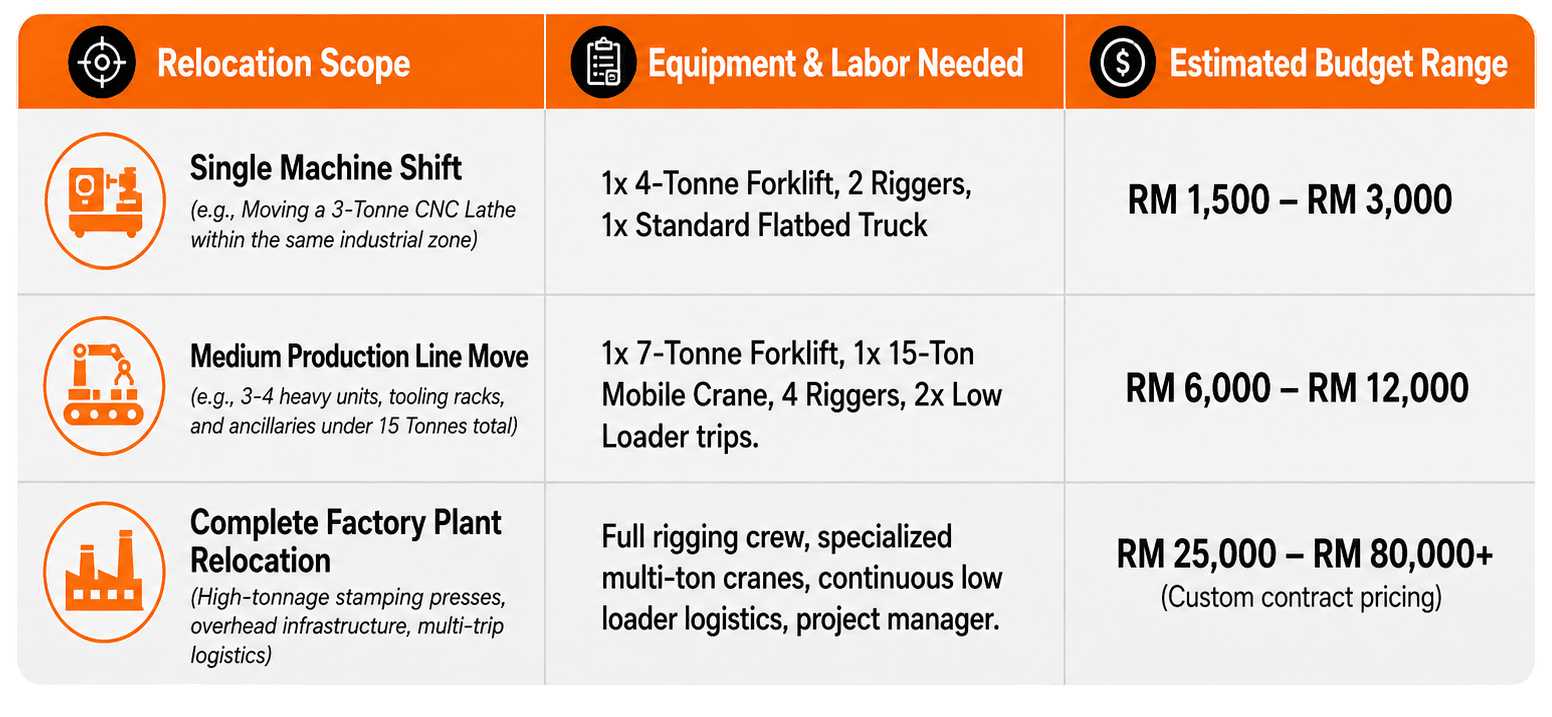
Estimated Budget Matrix: What Will Your Move Cost?
Because every industrial floor layout and machine asset is unique, absolute pricing requires a physical site survey. However, the matrix below outlines typical industrial pricing structures based on project scope.

3 Hidden Factors That Influence Your Quote
When looking at competing quotes from heavy haulers, look past the baseline trip fees. Watch out for these three variable operational factors that can quickly balloon your final invoice:
- Floor Loading & Access Limits: If a mover has to lay down specialized steel plating to protect a fragile concrete floor slab from cracking under the weight of a machine skate, the extra setup time and equipment rental will bump up the labor rate.
- The Idling Penalty / Wait Time: Heavy transport trailers are priced on tight schedules. If your internal team takes three extra hours to decommission electrical lines or drain hydraulic oils before the movers can lift the asset, you will be billed expensive standby fees for the idle crew and equipment.
- Oversize Dimensions Overweight: A load does not have to be heavy to be expensive. If an asset is extraordinarily wide or tall, it forces the transport team to take a much longer, optimized route to avoid low bridges or tight toll plazas, increasing fuel consumption and road tax tolls.
The Strategic Takeaway: The cheapest quote is rarely the safest choice in heavy rigging. Saving a few hundred ringgit on an uncertified moving crew exposes your business to catastrophic machinery damage and prolonged operational downtime. Look for transparency, explicit insurance coverage limits, and a proven track record handling your specific class of industrial hardware.